Sep 23, 2025
🎮 Analyzing How Disability Models Shaped the Xbox Adaptive Controller
Introduction
Gaming today is more than entertainment—it’s a way of belonging. On Discord, Twitch, and Reddit communities like r/DisabledGamers, players share setups, 3D-print mounts, and swap tips for making mainstream games playable. For many disabled players, the barrier isn’t desire or skill—it’s hardware designed around a single “standard” body.
Adaptive controllers, like the Xbox Adaptive Controller (XAC) and PlayStation Access Controller, are changing that. But they’re not just about independence. They’re about interdependence: players, families, therapists, and modders working together to configure controls so that gaming becomes accessible, joyful, and social again.
What is the Adaptive Controller?
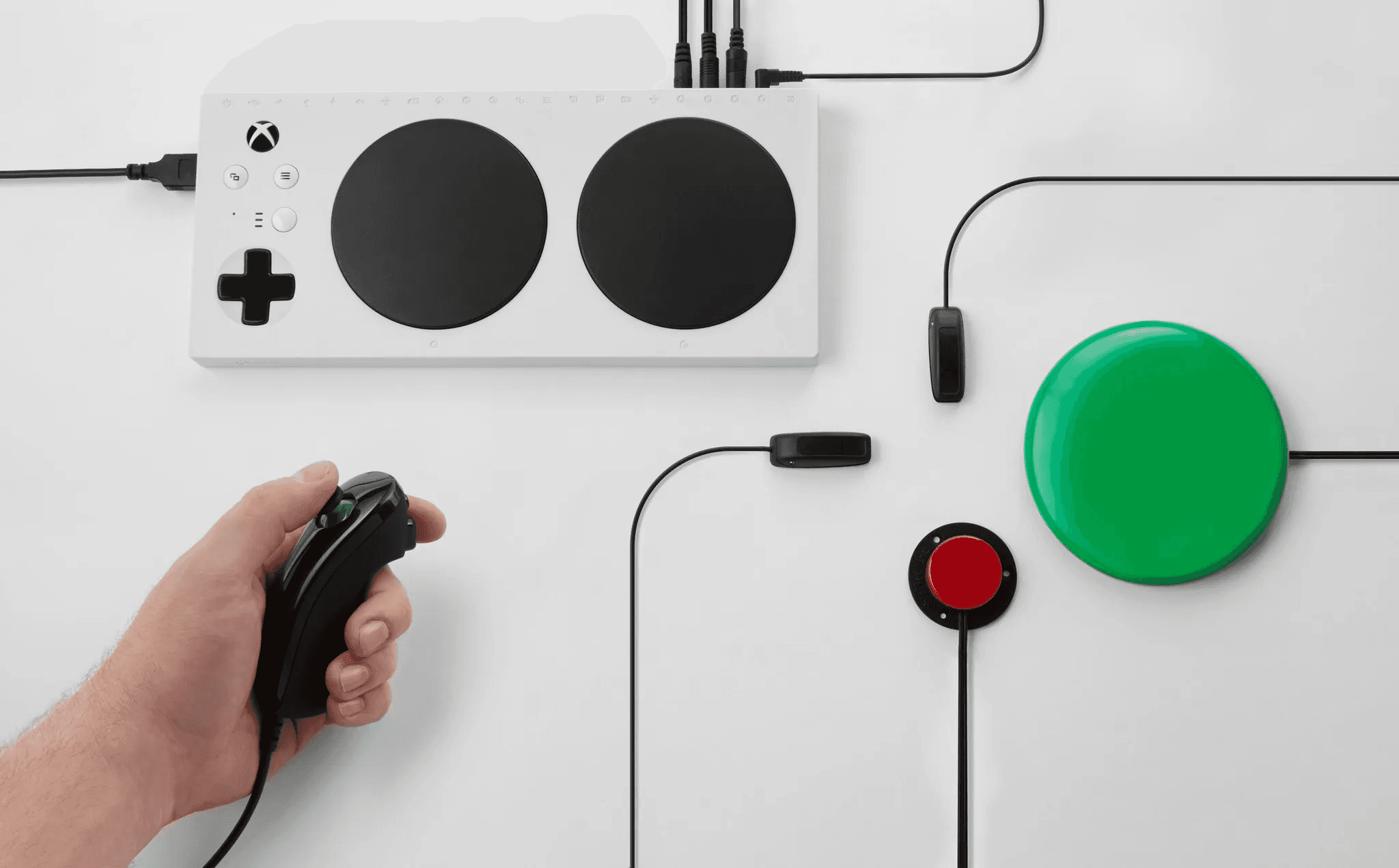
An adaptive controller is a customizable input hub that lets players plug in switches, joysticks, pedals, or mounts and remap controls to their needs. Instead of forcing players to adapt to the controller, the controller adapts to them. (Microsoft, 2018).
Key Features
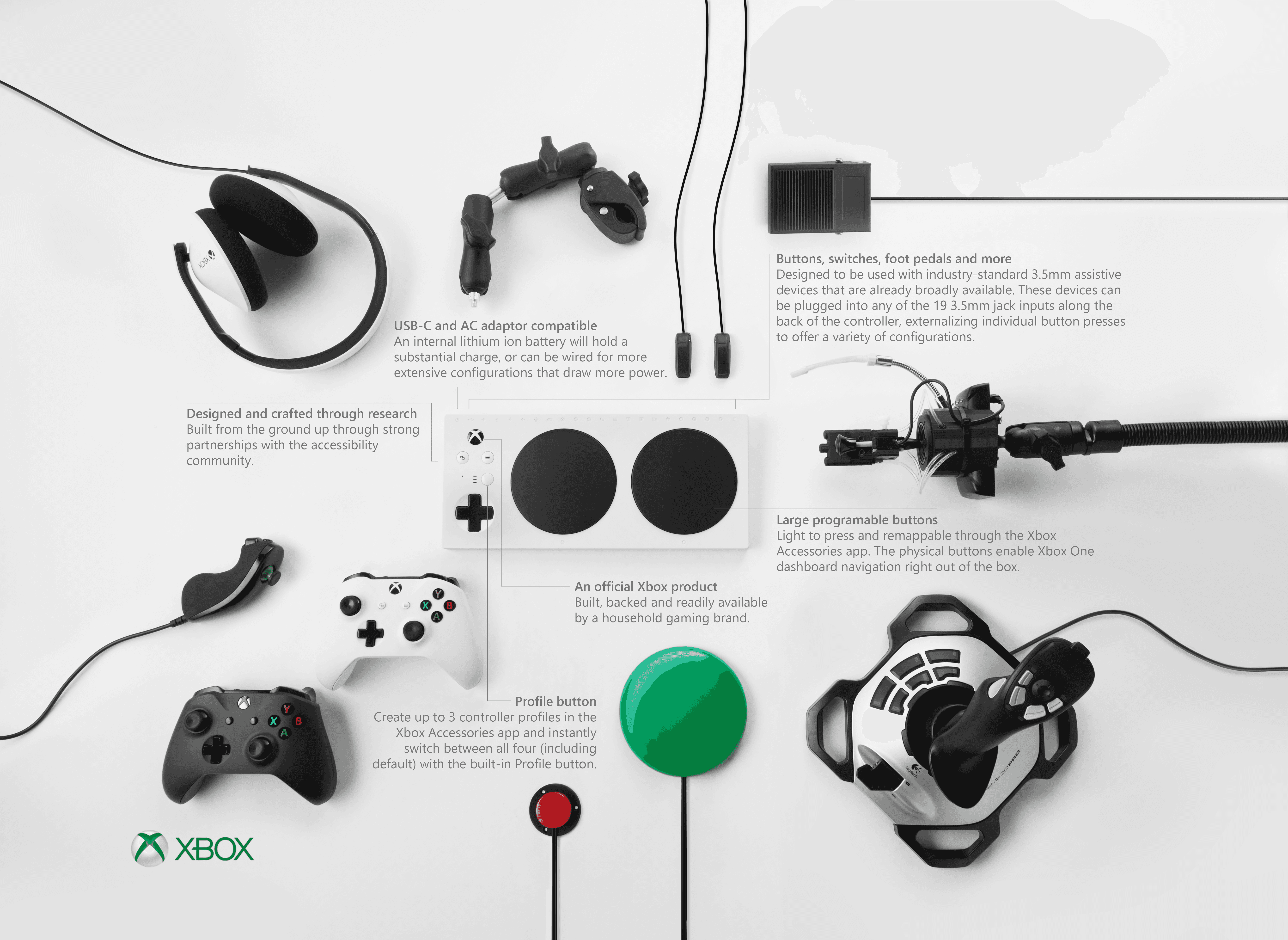
Large Programmable Buttons: Two prominent buttons (A and B) can be mapped to any controller function. They are larger and easier to press than standard buttons.
External Input Compatibility: Its 19 input jacks (3.5mm ports) allow users to connect switches, buttons, joysticks, and specialized input devices.
Modular Design: The XAC supports creative setups—foot pedals, chin joysticks, sip-and-puff breath controllers, or any combination that works for a user’s needs.
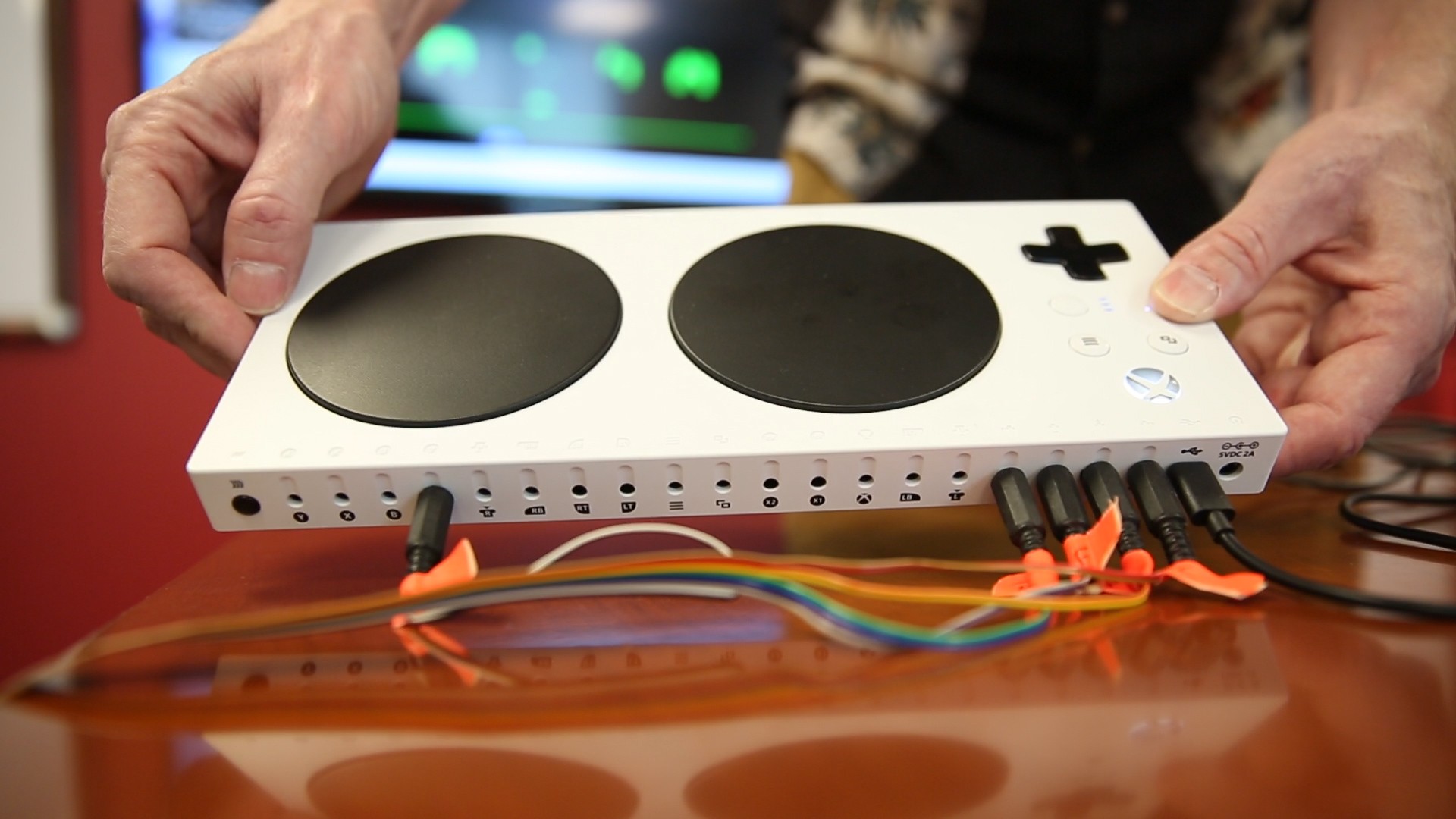
“It’s a completely modular controller hub that transforms random buttons and accessories into Bluetooth X-Input devices without needing extra software… do whatever the hell you want.”
— Community reviewer (Microsoft Xbox, 2018)
In practice, that means a player with limited hand mobility might map two shoulder buttons to a large floor pedal, or spread controls across multiple big switches within easy reach.
Who Benefits from the Adaptive Controller?
Adaptive controllers benefit:
Disabled players with limited mobility, chronic pain, or asymmetrical strength.
People who use switches, pedals, or alternative inputs for comfort and stamina.
Friends and caregivers, who often help configure and maintain the setup.
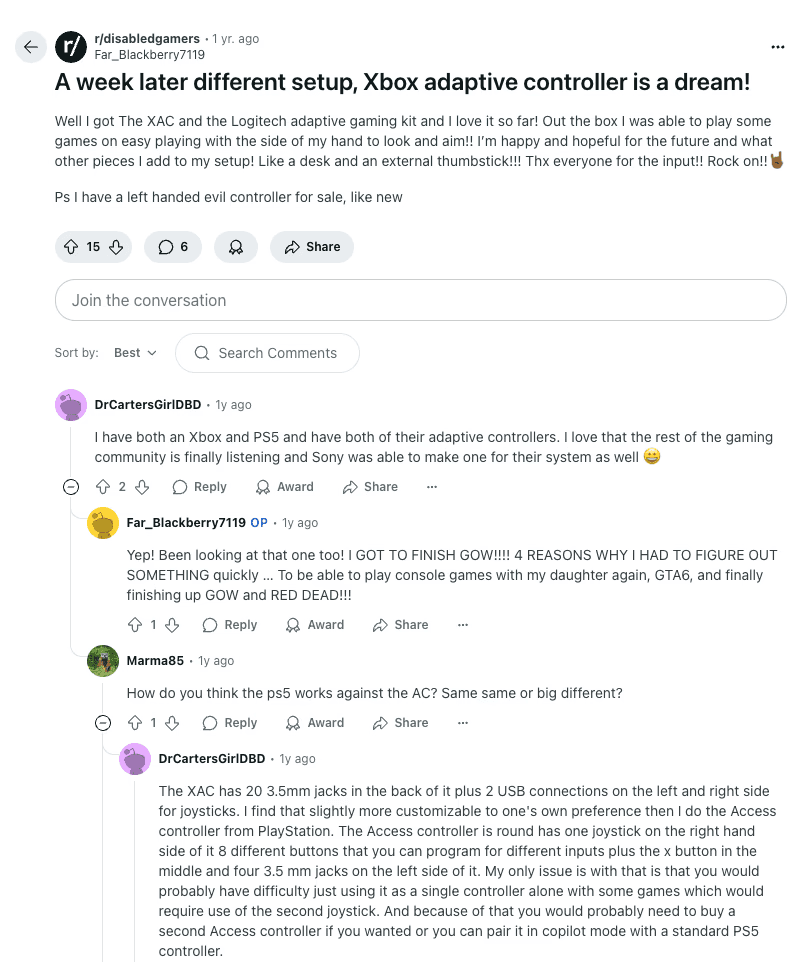
The result isn’t just access—it’s participation. As one Reddit user put it: “I couldn’t reach the triggers on my own, but with the Access Controller and some help setting it up, I finally play shooters again.”
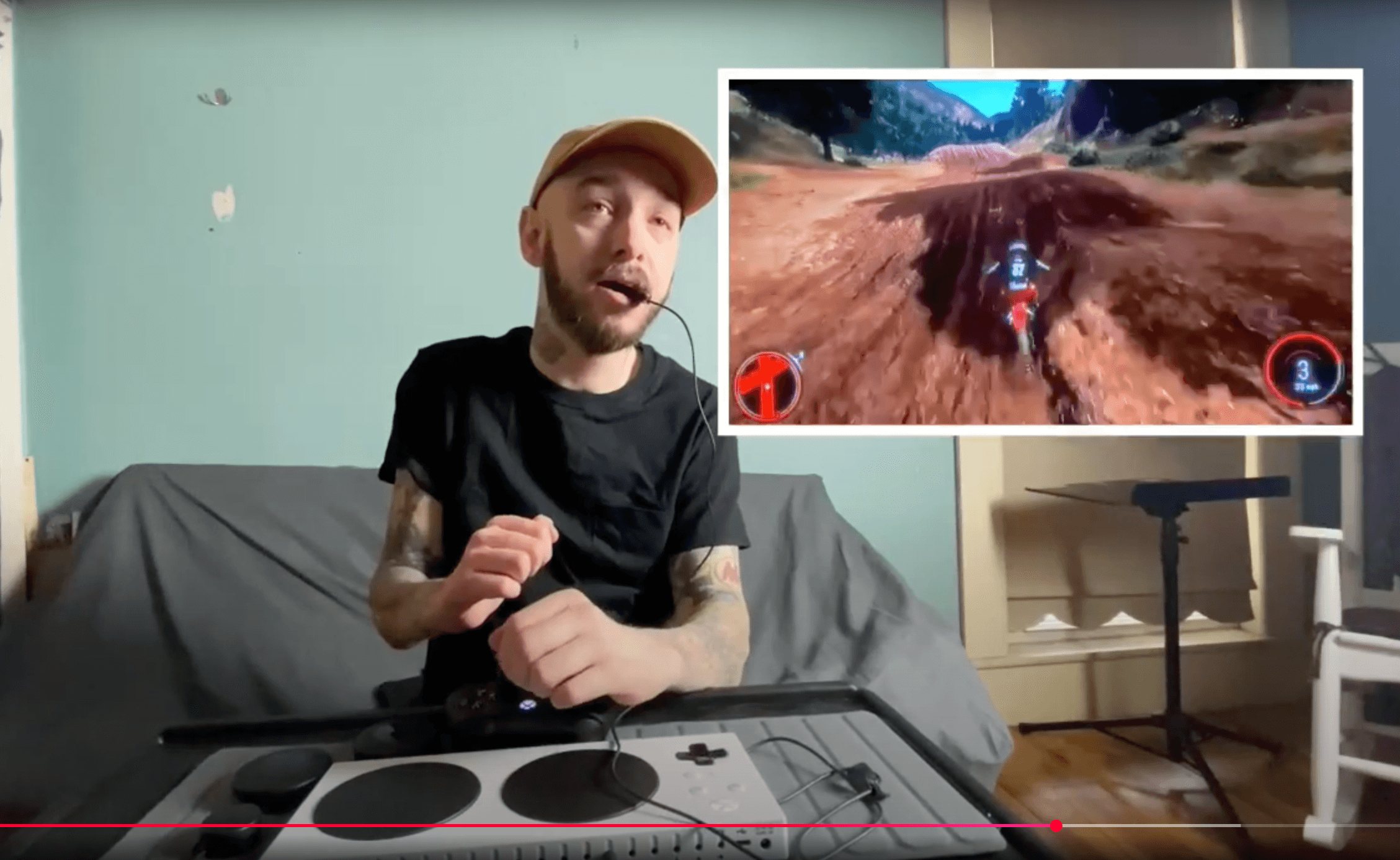
“I split controls between my feet and my one hand, then used the Adaptive Controller’s ports for extra switches. It took a lot of trial and error, but now I can play with my friends again.”
— Reddit user (r/disabledgamers)
With over 3 billion people in the global gaming community, the XAC ensures that disabled gamers can participate in this major form of entertainment, social connection, and even esports.
Models of Disability in the Design
Medical model: Early assistive devices often framed disability as a deficit to be corrected. The adaptive controller still reflects this in its role as a “workaround” for fine motor limitations.
Social model: These devices address barriers in design. Standard controllers assume two hands with symmetrical dexterity. Adaptive controllers recognize that exclusion is built into hardware, not into the player.
Interdependence lens: Today, setups are co-created. A player might rely on a sibling to configure button mapping, or on an online community for tips. Access is collective—emerging from people, tools, and contexts together.
Conclusion: While adaptive controllers began with a medical model impulse, they are better explained today through the social model and an interdependence framing that highlights access as shared.
Closing
Adaptive controllers are more than gadgets—they’re platforms for collective play. They move us beyond “make me independent” toward “make play possible, together.” When hardware is flexible and communities share knowledge, people with disabilities can participate fully in gaming culture—on their own terms.
📚 References
Bennett, C. L., Brady, E., & Branham, S. M. (2018). Interdependence as a frame for assistive technology research and design. Proceedings of the 20th International ACM SIGACCESS Conference on Computers and Accessibility (ASSETS ’18), 161–173. ACM. https://doi.org/10.1145/3234695.3236348
Microsoft. (2018). Xbox Adaptive Controller. Xbox. https://www.xbox.com/en-US/accessories/controllers/xbox-adaptive-controller
Microsoft. (2019). Devices, accessories, and augmentations (Inclusive Design Toolkit). Inclusive Design. https://inclusive.microsoft.design/tools-and-activities/DevicesAccessoriesandAugmentations.pdf
Microsoft Garage. (2018). Xbox Adaptive Controller. Microsoft Garage. https://www.microsoft.com/en-us/garage/wall-of-fame/xbox-adaptive-controller/
Microsoft Xbox. (2018, May 17). Introducing the Xbox Adaptive Controller [Video]. YouTube. https://www.youtube.com/watch?v=rXap8Nwj3PI
Breadbox64. (2020). Adaptive chin check mod. Breadbox64. https://www.breadbox64.com/blog/adaptive-chin-check-mod/
Reddit. (2023). Xbox Adaptive Controller — need advice to create a left-hand-only setup for my friend. r/disabledgamers. https://www.reddit.com/r/disabledgamers/comments/17qnv9z/xbox_adaptive_controller_need_advice_to_create_a/
Retief, M., & Letšosa, R. (2018). Models of disability: A brief overview. HTS Teologiese Studies / Theological Studies, 74(1), 1–8. https://doi.org/10.4102/hts.v74i1.4738
SpecialEffect. (2018). SpecialEffect and Microsoft: Xbox Adaptive Controller. SpecialEffect. https://www.specialeffect.org.uk/
The AbleGamers Charity. (2018). AbleGamers partners with Microsoft on the Xbox Adaptive Controller. AbleGamers. https://ablegamers.org/
The Cerebral Palsy Foundation. (2018). CPF helps shape the Xbox Adaptive Controller. Cerebral Palsy Foundation. https://www.yourcpf.org/